BREAKING
HOLY SMOKES: Trump Team Floats Cash Incentives and HARD OPTIONS in Greenland Power Play…

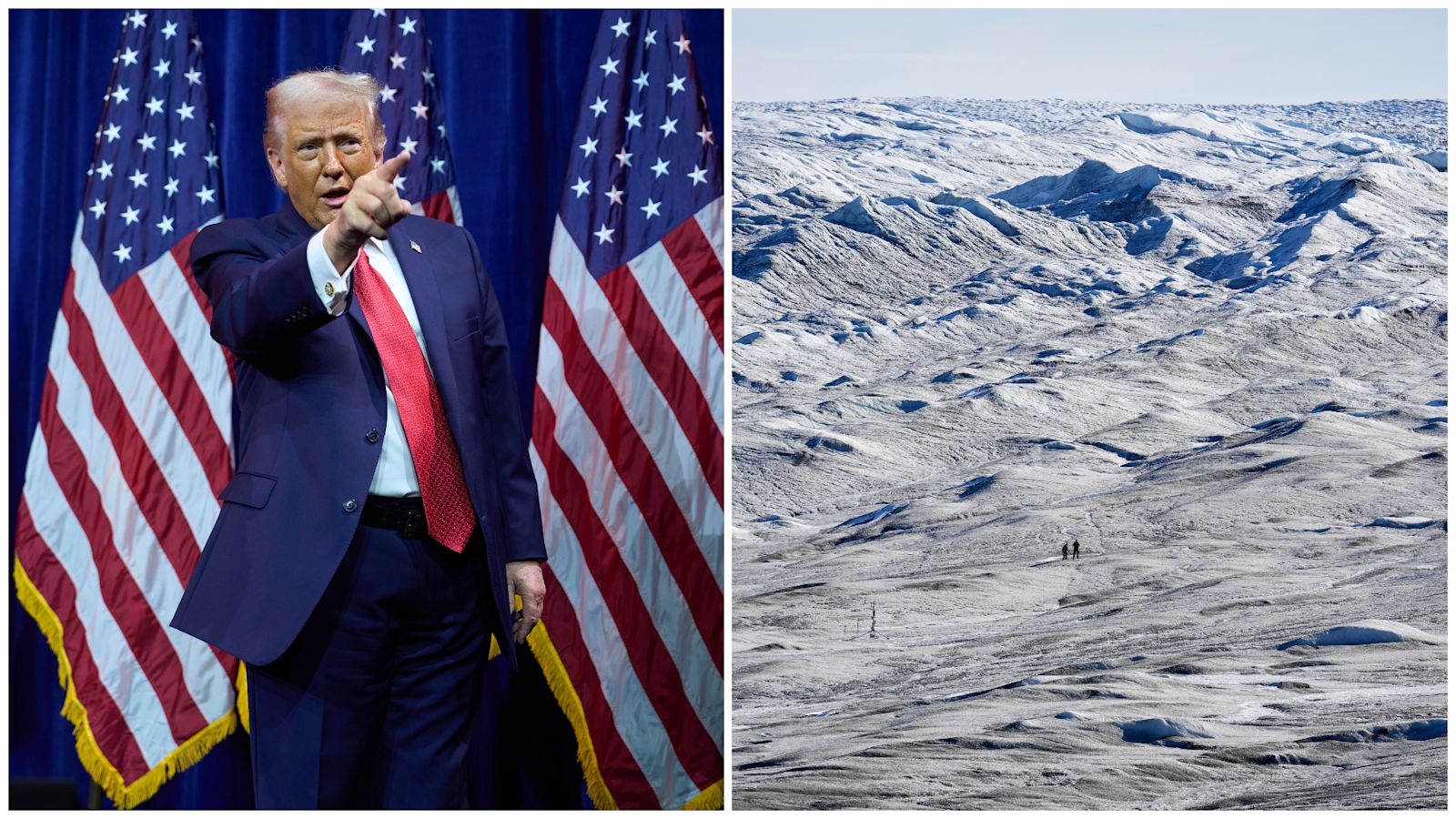
President Donald Trump has thrust one of the most strategic pieces of real estate on the planet back onto the center stage of American foreign policy—Greenland—and the world is taking notice. Recent developments involving envoys from Denmark and Greenland meeting at the White House signal an unprecedented moment in Arctic geopolitics.
At the heart of the drama are efforts by Trump and his administration to reconsider U.S. posture toward Greenland, an autonomous territory of the Kingdom of Denmark, for reasons rooted in security, natural resources, and global influence.
This isn’t the first time Trump has publicly suggested the United States should expand its footprint in Greenland, but the renewed intensity and national security framing have elevated the issue to a level few expected.
In the West Wing, Trump advisers sat down with Denmark’s ambassador and Greenland’s chief representative to clarify Washington’s ambitions—and to field fierce pushback from allied diplomats.
The Danish and Greenland envoys made clear they oppose any unilateral shift in Greenland’s status without the consent of its people and government, underscoring the delicate diplomatic balance at stake.
Trump’s core argument is rooted in military and geopolitical competition. He has argued repeatedly that control of Greenland is essential to deter Russia or China from gaining dominance in the Arctic—a region opening rapidly due to climate change and strategic positioning.
“We are going to do something on Greenland whether they like it or not,” Trump reportedly said, emphasizing that inaction could allow Russia or China to fill the gap.
This blunt statement has shocked allies and triggered urgent diplomatic engagements, including the envoys’ presence in Washington seeking reassurance.
Trump has not limited his tactics to rhetoric alone. His administration has also explored financial incentives aimed at Greenland’s roughly 57,000 residents, weighing payments reportedly ranging from $10,000 to $100,000 per person as part of a strategy to encourage them to align more closely with the United States.
The proposal, often described as a lump sum payment plan, has ignited fierce debate. Proponents see it as a clever, market-based way to secure influence without military conflict. Critics call it controversial and diplomatically fraught.
Trump’s wider team has not ruled out any options—including military measures—if diplomatic and incentivized paths fail to achieve U.S. interests. The phrase “military is always an option” has sent shockwaves through Europe.
European capitals swiftly reacted. France, Germany, and the U.K. have all stated that Greenland’s future should be determined exclusively by the Greenlandic and Danish governments—not by external pressure.
In Copenhagen, Denmark’s leadership has reaffirmed Greenland’s sovereignty, denouncing any notion that the island could or should be transferred to the U.S. without clear consent.
Greenlanders themselves have also been vocal. Political leaders on the island insist they do not want to be Americans, emphasizing self-determination and rejecting external imposition.
Despite that resistance, Trump argues that Greenland represents a strategic prize too critical to cede to great-power rivals. He maintains that ownership—not just a treaty or temporary access—offers America a lasting advantage.
Secretary of State Marco Rubio is scheduled to meet with Danish officials following the urgency of recent developments.
Back home in the United States, the proposal has polarized opinion. Supporters praise the forward-thinking strategy to secure American interests and blunt adversarial encroachment in the Arctic.
They point to Greenland’s vast mineral resources, missile defense advantages, and geographic positioning as reasons Washington cannot afford to stand idle.
Opponents, including bipartisan foreign policy figures, warn that any attempt to alter Greenland’s status could damage NATO and undermine trust among allies.
Still, Trump’s messaging has tapped into a broader conservative instinct for decisive action on the world stage—favoring bold, unorthodox policy moves to protect U.S. security and prosperity.
White House officials believe that incentives combined with diplomatic pressure could be enough to transform Greenland’s relationship with the United States over time.
If that fails, national security voices in the administration argue, harder options must remain on the table to ensure Greenland does not become a Russian or Chinese foothold in the Arctic.
For now, diplomats from Denmark and Greenland continue to press their case in Washington, urging restraint and respect for international law.
But Trump’s repeated insistence that the U.S. must act to secure its strategic interests—“whether they like it or not”—signals an administration prepared to push the envelope in defense of America’s global role.