BREAKING
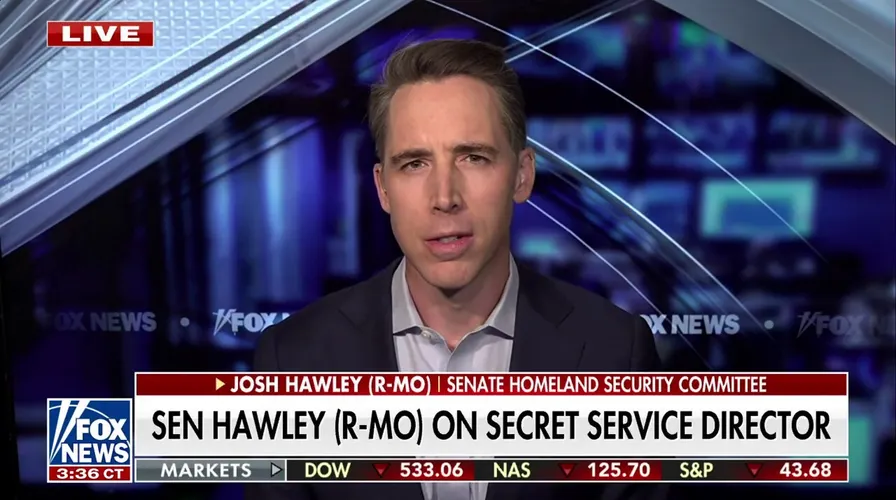
BREAKING: Josh Hawley Says a Whistleblower Told Him That Secret Service…

A whistleblower has come forward with allegations that could redefine how we view security protocols for former presidents.
According to this insider, Secret Service headquarters explicitly instructed agents not to request additional manpower for former President Donald Trump’s rally in Butler, Pennsylvania, where an assassination attempt nearly succeeded.
This directive, if true, represents not just a failure of security but a betrayal of the highest order.
The incident, which occurred on July 13, 2024, saw Trump narrowly escaping an assassination attempt, with one spectator tragically losing his life.
The aftermath has been a whirlwind of investigations, resignations, and now, whistleblower allegations that paint a picture of deliberate negligence.
The whistleblower’s account, shared through various conservative voices on X, suggests that Secret Service officials at headquarters discouraged agents from seeking extra security, arguing that Trump, as a former president, did not warrant the same level of protection as an incumbent.
This revelation comes in the wake of Acting Secret Service Director Ronald Rowe Jr.’s testimony, where he seemed to downplay the security lapses.
However, Senator Josh Hawley’s aggressive pursuit of the truth has unearthed what many conservatives feared: a systemic failure, possibly driven by political bias against Trump.
Hawley’s letter to Rowe directly challenges the director’s narrative, highlighting that the denial of resources was not just an oversight but a directive from the top.
The implications of this are staggering. If Secret Service agents were indeed told not to request additional security, it suggests a premeditated decision to expose Trump to higher risks.
This isn’t about mere incompetence; it’s about a potentially malicious intent to undermine the safety of a former president who remains a significant figure in American politics.
Conservatives are rightfully outraged, questioning the motives behind such a decision.
Was this a calculated move to make Trump vulnerable, or an extreme case of bureaucratic oversight driven by political animus?
Moreover, the whistleblower’s account of retaliation against agents who raised concerns adds another layer of scandal.
It points to a culture within the Secret Service where speaking up against inadequate security measures for Trump could cost you your career.
This chilling effect on whistleblowers within the agency not only endangers former presidents but also erodes public trust in one of the most critical security institutions in the country.
The conservative community’s reaction has been one of disbelief and fury.
Posts on X have been ablaze with calls for accountability, not just for the agents directly involved but for the leadership that set such a disastrous policy in motion.
The narrative that Trump’s status as a former president somehow diminishes his need for robust security is not just legally questionable but morally bankrupt, especially given the ongoing threats against his life.
This scandal demands a thorough investigation, not just to understand what went wrong but to ensure it never happens again.
The Secret Service’s primary duty is to protect, not to play politics with lives. If these allegations hold, heads must roll, and reforms must be swift and severe.
The safety of former presidents, regardless of political affiliation, should never be compromised by bureaucratic decisions or political vendettas. This is a wake-up call for America: security should never be politicized.