BREAKING
Neighbor of Would Be 2nd Trump Shooter Said Ryan Routh Was “Cudkoo”

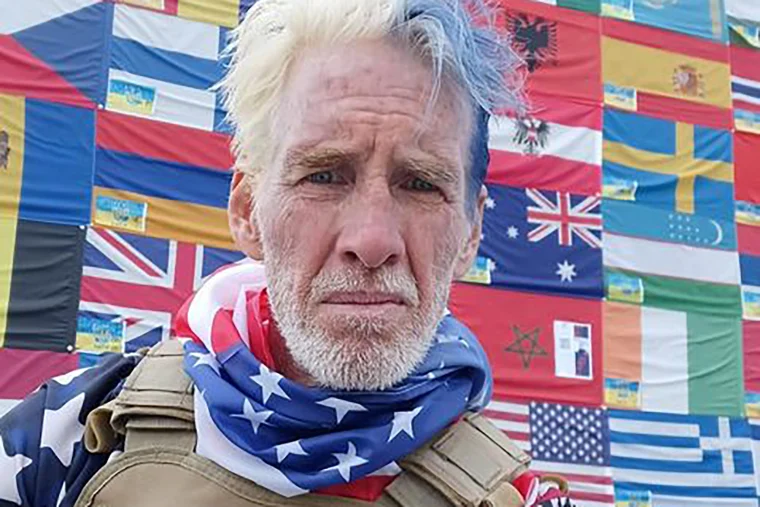
Ryan Routh, known to his neighbors as the “cuckoo” next door, was not just an ordinary man.
He was the second shooter in an attempt on President Trump’s life, an act that has sent shockwaves through all of America, highlighting the dangers of ignoring the signs of mental instability among us.
Ryan’s neighbor, who wished to remain anonymous for fear of backlash, described him in terms that would make any conservative’s skin crawl.
“He was always a bit off, you know? The kind of guy who’d argue about the shape of the Earth or the benefits of socialism,” the neighbor recounted with a tone of disdain. “Cuckoo, absolutely cuckoo.”
This epithet, “cuckoo,” isn’t just a throwaway insult. In conservative parlance, it’s a condemnation of someone who’s not just eccentric but dangerously detached from reality.
Here was a man who, in his ideological fervor, found himself on the wrong side of history, not through mere disagreement but through violent action.
The neighbor’s aggressive tone when describing Ryan wasn’t just about personal dislike. It’s emblematic of a broader frustration with what they perceive as liberal permissiveness towards mental instability for the sake of political correctness.
“If he was so cuckoo, why didn’t someone do something?” the neighbor asked, his voice rising in frustration. “We’re quick to talk about gun control but slow to address the real issue—people like him who should never have access to firearms.”
Ryan’s actions, or more accurately, his mental state leading up to them, serve as a chilling reminder of the dangers of not confronting mental health issues head-on.
Instead of stripping away gun rights, society should focus on identifying and treating those who are clearly a danger to themselves and others. “You can’t legislate sanity,” the neighbor remarked bitterly, “but you can sure as hell do something about the cuckoos before they go off the deep end.”
This incident has fueled calls for a more robust system of mental health checks, not as an infringement on privacy or rights, but as a safeguard for society.
“We’re not talking about taking away rights,” the neighbor clarified, his voice now calm but firm, “we’re talking about protecting the community from those who’ve lost touch with reality.”
In the end, Ryan Routh’s story isn’t just about a failed assassination attempt or a neighbor’s disdain.
It’s a stark narrative on the conservative belief in proactive community vigilance, personal responsibility, and the critical need for mental health interventions that respect individual freedoms while ensuring safety.
The cuckoo next door might be a character of folklore, but in today’s America, ignoring such signs could mean the difference between peace and tragedy.
ABC Whistleblower Under Oath Says Kamala Campaign Got Questions Before Debate

A few days ago, an ABC whistleblower, under the weight of perjury, came forward with allegations that the Kamala Harris campaign was privy to debate questions ahead of their much-publicized confrontation with former President Donald Trump.
This revelation, if proven true, not only casts a long shadow over the integrity of political debates but also raises serious questions about media bias and fairness in electoral processes.
The whistleblower’s affidavit, released under conditions of anonymity due to the potential for retaliation, paints a disturbing picture of collusion between ABC News and the Harris campaign.
According to the document, not only were sample questions shared, but there were explicit assurances that only Trump would be subject to real-time fact-checking, effectively handicapping his debate performance while giving Harris an unfair advantage.
This isn’t just a breach of trust; it’s an assault on the democratic process itself.
Why is this important? Political debates are supposed to be a battleground where ideas clash, policies are scrutinized, and voters get a glimpse of what each candidate stands for under pressure.
When one side knows the questions in advance, it transforms what should be a contest of wits and policy into a rehearsed performance, robbing the public of genuine insight into the candidates’ capabilities.
This revelation undermines the very foundation of democratic engagement, where voters deserve an unrigged, fair contest.
The implications are vast. If ABC News, a network with significant influence, can be accused of tilting the scales, what does this say about trust in media?
For years, conservative voices have decried media bias, often labeled as conspiracy theories by the same outlets now under scrutiny.
This incident might just be the concrete evidence conservatives needed, not as a vindication of conspiracy but as a stark reminder that bias can manifest in ways beyond editorial slant.
This scandal isn’t just about one debate or one campaign. It’s about the erosion of trust in institutions.
When media, which is supposed to serve as a watchdog, becomes a participant in political games, it’s not just conservatives who lose faith; it’s democracy itself that suffers. The American people, regardless of their political affiliations, deserve transparency and fairness.
This incident, if true, represents a betrayal of that trust.
The Harris campaign’s potential foreknowledge of debate questions could have significantly shaped public perception during a critical election cycle.
It’s a scenario where the playing field isn’t just uneven; it’s been deliberately tilted. This isn’t about partisan bickering; it’s about the integrity of our electoral process.
If candidates can’t be trusted to debate fairly, how can we trust them with the nation’s future?
As this story unfolds, the demand for accountability must be paramount. ABC News must face rigorous, independent scrutiny.
The Harris campaign’s involvement needs transparent clarification. Most importantly, such an event should galvanize reforms in how political debates are conducted, ensuring they remain a cornerstone of democratic discourse rather than a stage for orchestrated theatrics.
This isn’t just a moment for conservatives to say “I told you so”; it’s a wake-up call for every American concerned about the health of their democracy.
BREAKING: Stormy Daniels Reportedly Fears That Trump Will…

Adult film star Stormy Daniels has expressed a fear that should Donald Trump win the 2024 presidential election, she could face charges of treason.
This statement, dripping with melodrama, smacks of a desperate attempt to remain relevant in the public eye, particularly after her involvement in a high-profile legal tussle with Trump over a 2006 alleged affair.
Let’s dissect the absurdity of this claim. Treason, under U.S. law, is defined as levying war against the United States or adhering to their enemies, giving them aid and comfort.
Stormy Daniels, known for her adult entertainment career and subsequent political entanglement with Trump, suggesting she could be tried for treason is not just a stretch; it’s a ludicrous overreach into the realm of fantasy.
The narrative here seems to be crafted for sensationalism. Daniels, who has embarked on a stand-up comedy tour and is actively involved in public speaking against Trump, might be leveraging this fearmongering as a strategy to keep her name in the news cycle.
Her claim plays directly into the hands of those who thrive on chaos, painting Trump as a vengeful dictator in waiting, ready to misuse the powers of his office for personal vendettas.
This narrative, however, falls flat when one considers the legal and ethical constraints on any President, not to mention the checks and balances that define American governance.
Let’s not forget, that Daniels was at the center of a legal storm when Trump was convicted on 34 counts related to “hush money” payments. Her testimony was pivotal, yet to leap from that to fearing treason charges under a hypothetical Trump presidency reveals more about her own anxieties or perhaps her strategy to stay relevant than any credible threat from a legal standpoint.
The conservative view on this matter is clear: such claims are not just baseless but are part of a larger, more insidious strategy by the left to demonize Trump, painting him as a threat to democracy itself.
This tactic, often seen in political discourse today, seeks to manipulate public perception by associating the opposition with extreme, undemocratic actions.
Daniels, by suggesting she could be tried for treason, is engaging in a form of political theater, designed to incite fear among Trump’s detractors and perhaps rally them against him.
Moreover, this fearmongering overlooks the reality of how the legal system operates, especially against figures like Trump, who, despite his controversies, has operated within the bounds of the law as defined by courts.
The idea that Trump could whimsically decide to prosecute someone for treason based on personal grievances ignores the robust legal framework and due process that would need to be navigated.
In essence, Stormy Daniels’ claim of potential treason charges if Trump wins reeks of desperation for attention or an attempt to influence voter sentiment through fear.
For conservatives, this is yet another example of how the narrative around Trump has been consistently manipulated, not for legal or moral rectitude, but for political gain and sensationalism. It’s a reminder of how thin the line has become between fact-based discourse and sensationalist rhetoric in modern political commentary.