BREAKING
AMERICA FIRST: Trump Stops Wall Street from Buying Up Homes

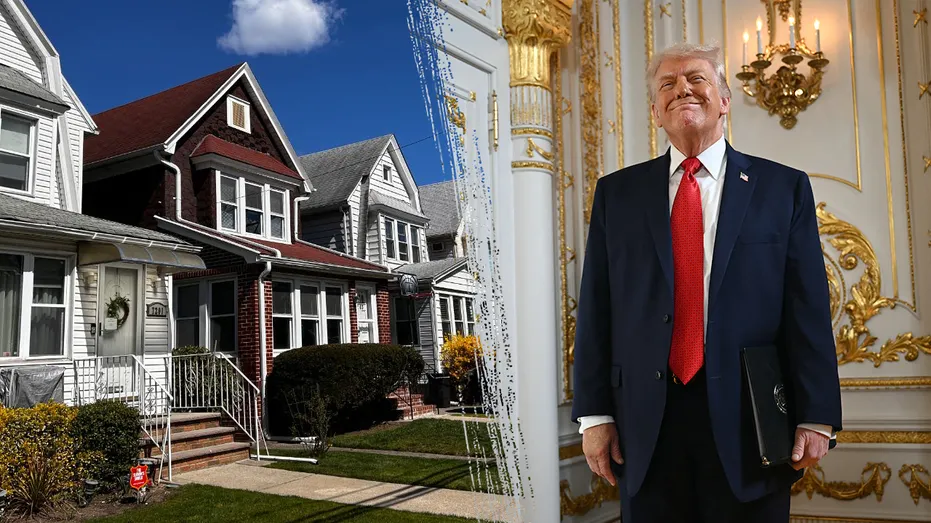
President Donald Trump signed a sweeping executive order on Tuesday aimed at stopping Wall Street firms from buying up single-family homes, a move designed to make homeownership more affordable for American families.
The order directs federal agencies to scrutinize large institutional investors and crack down on anti-competitive practices in the housing market. Trump said the policy will prioritize enforcement against coordinated vacancy and pricing strategies that keep homes out of the hands of families.
Titled “Stopping Wall Street from Competing with Main Street Homebuyers,” the order gives the Justice Department and the Federal Trade Commission 60 days to draft new rules or revise existing regulations on institutional purchases of single-family homes.
“To preserve the supply of single-family homes for American families and increase the paths to homeownership, it is the policy of my Administration that large institutional investors should not buy single-family homes that could otherwise be purchased by families,” Trump wrote.

The executive order targets major Wall Street players like Blackstone, American Homes 4 Rent, Invitation Homes, and Progress Residential, which together control tens of thousands of homes across the country. Their concentration is particularly high in fast-growing Sun Belt markets, where homeownership is increasingly out of reach for ordinary Americans.
While critics claim Trump may lack the legal authority to force these firms to sell or halt purchases, experts acknowledge the administration can still pressure them through antitrust scrutiny and federal investigations. The mere threat of DOJ or FTC action, analysts say, is enough to compel compliance.
Trump’s move follows growing public frustration with corporate landlords driving up home prices and limiting access to single-family homes, particularly for first-time buyers. The median age of a first-time homeowner has now reached 40, making it increasingly difficult for families to achieve the American Dream.
The White House emphasized that the executive order is only the first step. Agencies are instructed to coordinate with Congress on potential legislation that would codify restrictions on institutional investors, ensuring limits outlast this administration.
Legal experts note that any nationwide ban on institutional purchases would require statutory authority. Trump’s order sets the framework for lawmakers to act and signals a willingness to confront Wall Street head-on.

Even though large institutional investors own only a small fraction of single-family homes nationwide—less than 1% of the total—their influence is concentrated in key metro areas. In 22 U.S. counties, they control between 5% and 10% of the housing stock.
Sun Belt cities like Dallas, Houston, Atlanta, Phoenix, Jacksonville, Tampa, Charlotte, and Memphis are among the areas most affected, where corporate landlords dominate clusters of homes and drive up prices.
Trump framed the executive order as a defense of Main Street against predatory practices by Wall Street, arguing that ordinary Americans should not be priced out of their neighborhoods by investors seeking profit.
The administration will also review large-scale acquisitions of single-family homes for potential antitrust violations, sending a clear message to corporate landlords that their practices will face heightened scrutiny.
“Homeownership is the backbone of the American Dream,” Trump said in a statement. “Families should have the opportunity to buy a home, and we will not allow Wall Street to take that away from them.”
The move underscores Trump’s commitment to protecting everyday Americans from corporate overreach and restoring fairness to the housing market.
Analysts note that even if legal enforcement is limited, the order signals a political and economic threat that corporate investors cannot ignore. The administration’s willingness to use its regulatory powers sends a warning that predatory practices will no longer be tolerated.
Trump’s executive order follows his broader America First agenda, which has prioritized domestic growth, energy independence, and safeguarding American families from exploitation by elites and globalist interests.
Institutional investors have long bought distressed properties and converted them into rental units, a practice that has fueled housing shortages in critical markets and placed additional pressure on working families.
Even though their national share remains small, these concentrated holdings allow Wall Street firms to manipulate prices in specific metro areas, creating pockets where homeownership is effectively out of reach.
Trump’s order is designed to level the playing field, giving local buyers a fair chance to purchase homes without competing against powerful institutional investors with near-unlimited resources.
The administration has also directed agencies to study the impact of corporate purchases on affordability and neighborhood stability, aiming to develop long-term rules that protect families and communities.